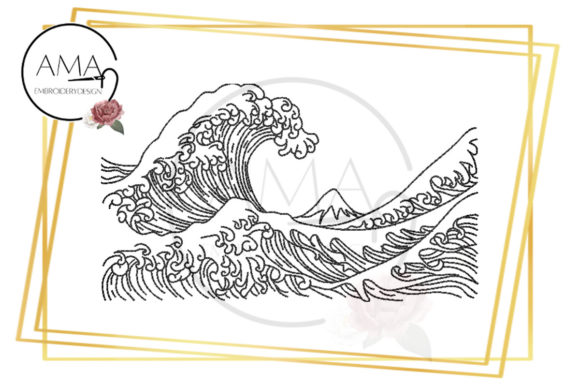
Review: The Great Wave off Kanagawa Redwork
As an embroidery designer who spends countless hours digitizing and testing files for commercial use, I am always on the lookout for designs that balance artistic integrity with technical practicality. Recently, I explored The Great Wave off Kanagawa Redwork on Creative Fabrica, considering it for a upcoming line of coastal-themed home decor and apparel. This review breaks down my honest assessment of this machine embroidery design, focusing on its suitability for real-world projects, from Etsy listings to boutique merchandise.
First Impressions and Visual Mood
The immediate appeal of The Great Wave off Kanagawa Redwork lies in its iconic imagery. Hokusai’s masterpiece is universally recognized, and translating such a complex woodblock print into embroidery is no small feat. The redwork style simplifies the original’s intricate details into clean, bold lines, which is a smart choice for machine embroidery. Redwork traditionally relies on a single thread color, usually red, against a neutral background, creating a striking high-contrast look that feels both vintage and modern.
The visual mood is dynamic yet controlled. It captures the "force of nature" mentioned in the product description without appearing chaotic. For designers, this means the stitch path likely follows the natural flow of the waves, reducing potential thread breaks caused by abrupt direction changes. The decorative appeal is strong, making it an excellent candidate for products where visual impact is paramount, such as tote bags or pillow covers.
Practical Application in Real Projects
When evaluating a digital embroidery file, I always ask: "Where does this belong?" Based on the line-art nature of this design, The Great Wave off Kanagawa Redwork is incredibly versatile. Here is how I envision it performing across various handmade products:
- Tote Bag Design: This is perhaps the most natural fit. A canvas tote provides a stable, flat surface that showcases the linear details of the wave perfectly. The redwork style stands out beautifully against natural cotton or linen fabrics.
- Kitchen Towels and Aprons: For Beach-themed kitchen decor, this design adds a sophisticated touch. Since redwork is typically less dense than fill-stitch designs, it remains soft and flexible, which is crucial for items that need to be folded or used frequently.
- Sweatshirt Embroidery: Placing this on a chest pocket or the back of a crewneck sweatshirt creates a subtle yet stylish statement. The single-color approach keeps the garment from feeling too heavy or stiff.
- Embroidered Patch: If you plan to create iron-on or sew-on patches, this design’s clear outlines make it ideal for cutting around the edges. It would look fantastic on denim jackets or canvas caps.
- Nursery Decor and Baby Items: While the original wave is powerful, the simplified redwork version can feel gentle enough for nursery decor, especially if stitched in softer tones like coral or slate blue instead of traditional red.
Technical Considerations for Embroiderers
While the aesthetic is promising, successful execution depends on technical precision. Here are the critical factors I consider before stitching any new design from Creative Fabrica embroidery collections.
Fabric and Stabilizer Selection
Redwork designs rely heavily on the quality of the running stitch. Because there are no dense fill stitches to anchor the fabric, proper stabilization is non-negotiable. I recommend using a cut-away stabilizer for stretchy fabrics like jersey knits for custom apparel, and a tear-away for woven fabrics like cotton twill or linen. Always test on scrap fabric first. This allows you to check for puckering, which can ruin the clean lines of the wave.
Thread Colors and Contrast
The beauty of this design hinges on contrast. If you are stitching on white or cream fabric, a vibrant red thread will pop. However, if you are working with dark fabric, you may need to adjust the thread color to a lighter shade or add an underlay stitch if the digitizer has included one. Review the thread colors in your software before loading the file. If the design lacks sufficient underlay, dark fabrics might show through the stitches, diminishing the visual clarity of the wave.
Hoop Size and Placement
One detail often overlooked is the hoop size. Since the product description notes that the design comes with multi sizes, you must confirm which hoop fits your specific project. For a large tote bag, a 5x7 or 6x10 hoop might be necessary to capture the full span of the wave. For a cap or a small patch, a 4x4 hoop might require scaling down, which could compromise the tiniest details. Always check the dimensions provided on the Creative Fabrica product page to ensure the design fits your intended area without overcrowding.
Stitch Density and Texture
Redwork is generally low density, which is beneficial for textured fabrics. High-density satin stitch or fill stitch designs can sink into plush towels or thick sweatshirts, but the open nature of this design should sit nicely on top. However, be mindful of curved surfaces like caps. The long, sweeping lines of the wave might distort if not hooped correctly with a cap frame. Use a strong stabilizer and ensure the fabric is drum-tight to prevent shifting during stitching.
Enhancing Product Value and Brand Consistency
For small business owners and Etsy sellers, the choice of design assets directly impacts perceived value. The Great Wave off Kanagawa Redwork offers a level of sophistication that can elevate a simple handmade product into a premium item. The iconic nature of the image builds instant buyer trust because it is familiar and beloved. When paired with high-quality materials, this embroidery file can justify a higher price point.
Furthermore, this design supports brand consistency for shops focused on coastal, artistic, or minimalist themes. It photographs well, which is essential for online sales. The clean lines create sharp shadows and highlights in product photography, making your printable mockup or actual photos look professional. Whether you are selling finished products or using the design for personalized gifts, the visual appeal drives customer engagement.
Final Verdict and Best Practices
Is The Great Wave off Kanagawa Redwork worth downloading? For designers looking for a versatile, iconic design that works well on a variety of fabrics, yes. It is particularly strong for tote bags, kitchen linens, and light apparel. However, success requires attention to detail.
Before launching this into your commercial embroidery lineup, follow these steps:
- Verify File Details: Check the Creative Fabrica product page for specific file formats (PES, DST, JEF, etc.) to ensure compatibility with your machine.
- Review Licensing: Confirm the license terms for commercial use. Most Creative Fabrica designs allow for physical finished products, but always double-check to protect your business.
- Test Stitching: Run a test on your intended fabric. Inspect small details after stitching to ensure no threads have pulled out or tangled.
- Mockup Comparison: Compare light and dark fabric mockups to decide on the best thread color strategy for your inventory.
In conclusion, this design is a solid addition to any embroidery library. It respects the source material while adapting it for the constraints and opportunities of machine embroidery. With proper stabilizer use and careful hoop selection, The Great Wave off Kanagawa Redwork can become a standout piece in your Beach-themed collection or year-round artisan offerings.